July 14, 1955: The United States ratifies the 1949 Geneva Conventions for the Protection of Victims of War. Of the four conventions, the third is the “Convention Relative to the Treatment of Prisoners of War.”
August 21, 1996: President Clinton signs the War Crimes Act of 1996. “After 40 years, after the ratification of the Geneva Conventions, [we discovered] that it was not self-enacting, and we actually have never passed the necessary legislation to accept jurisdiction within our Federal courts to prosecute war crimes that we were aware of,” says Oklahoma Senator James Inhofe.
Subsection (d)(1)(A) of the War Crimes Act expressly defines and forbids torture: “The act of a person who commits, or conspires or attempts to commit, an act specifically intended to inflict severe physical or mental pain or suffering (other than pain or suffering incidental to lawful sanctions) upon another person within his custody or physical control for the purpose of obtaining information or a confession, punishment, intimidation, coercion, or any reason based on discrimination of any kind.”
Violation of the War Crimes Act is a felony with a maximum sentence of life imprisonment, or death if the torture victim dies.
September 11, 2001, 12:05 pm: Defense secretary Donald Rumsfeld is told that al Qaeda is likely responsible for the morning’s attacks, based on a phone call the NSA intercepted 15 minutes after the Pentagon was hit.
September 11, 2001, 2:40 pm: Rumsfeld demands “Best info fast. Judge whether good enough hit S.H. [Saddam Hussein] at same time. Not only UBL [Osama bin Laden].… Need to move swiftly.… Go massive. Sweep it all up. Things related and not.”
Read more »
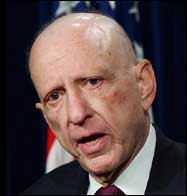 Like the gay old socialist queen he is, Arlen Specter is becoming a Democrat, so he can get elected until he is 100 years old. Looks like we don’t need to pay attention to Norm Coleman anymore Norm Coleman is now more important than he has ever been.
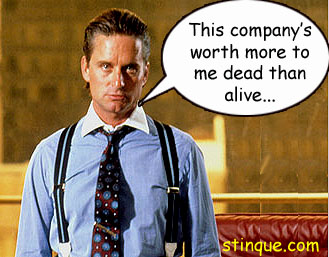 If you’re holding something valuable and fragile in your hand, right now, I suggest you put it down before reading what follows. That’s because if you’re holding, say, that coffee cup your kid decorated for you at day care, or a cell phone, or, more likely, that precious Fabergé egg your grandmother willed you before she passed away, you’re going to be overcome with an uncontrollable urge to smash is against the wall when you read of the latest twist in the saga of General Motors’ struggle for survival.
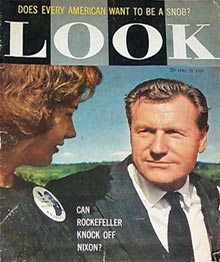 Blossom Dearie, Ann-Margret, Bruno Kirby, Jay Leno and Saddam Hussein celebrated birthdays.
 Have you guys heard of Citizen Quasar, who will free us all from the tyranny of the government with his pulsating star powers and interneptitude? In Oklahoma, the newest communist state with a theme song written by
  Because none of you bothered to get up off your asses and buy a
  What the fuck is it with Louisiana politicians? First it was Jindal and volcano monitoring,
NOJO • Tom Lehrer, 1928-2025 @JNOV: Does blockquote no longer work?Huh. Guess not.
JNOV • Tom Lehrer, 1928-2025 Oh shit. “ Cuban state media reported that 32 Cubans were killed in the U.S. attacks in…
JNOV • Tom Lehrer, 1928-2025 So…. Does blockquote no longer work? Am I 2026’s only loser? (see blurb)
JNOV • Tom Lehrer, 1928-2025 Welp Speaking to reporters on Air Force One, President Trump said that “Cuba looks like it is…
JNOV • Tom Lehrer, 1928-2025 My mood courtesy of Rhiannon Giddens: https://youtu.be/M7PvWw97Cq0
JNOV • Tom Lehrer, 1928-2025 A man who has his family and lackeys deeply embedded in every facet of our government is trying to…
JNOV • Tom Lehrer, 1928-2025 THIS IS NOT OKAY! WE’VE RUN THESE WAR GAMES FOR **YEARS**. SPOILER ALERT: A TON OF PEOPLE DIE.…
JNOV • Tom Lehrer, 1928-2025 FUUUUUUUUUUUUUUUCK! WHAT. THE FUCK?!!?!
NOJO • Tom Lehrer, 1928-2025 @ManchuCandidate: Summer definitely disappeared.
MANCHUCANDIDATE • Tom Lehrer, 1928-2025 BTW, has your favorite fundies gone to Ratpure?